- Tretinoin for Beginners: A Guide to Getting Started
- Should You Choose Cream or Gel?
- Which Strength is Right for You?
- Tretinoin for Sensitive Skin: How to Use It Safely
- Tretinoin for Acne
- Tretinoin for Hyperpigmentation
- Tretinoin for Wrinkles and Fine Lines
- Tretinoin for General Skin Texture
- Tretinoin for Sun Damage


Can You Use Niacinamide With Tretinoin? Full Guide

Can You Use Niacinamide With Tretinoin? Full Guide
Short answer: yes. Niacinamide is one of the few active ingredients that pairs well with tretinoin, and for many people, it actually makes the adjustment period more comfortable rather than harder. But “safe to combine” doesn’t mean “safe to combine carelessly” — how you layer them, and when, still matters. Here’s a complete breakdown of how the two work together, and how to build a routine around both.
What Does Niacinamide Actually Do?
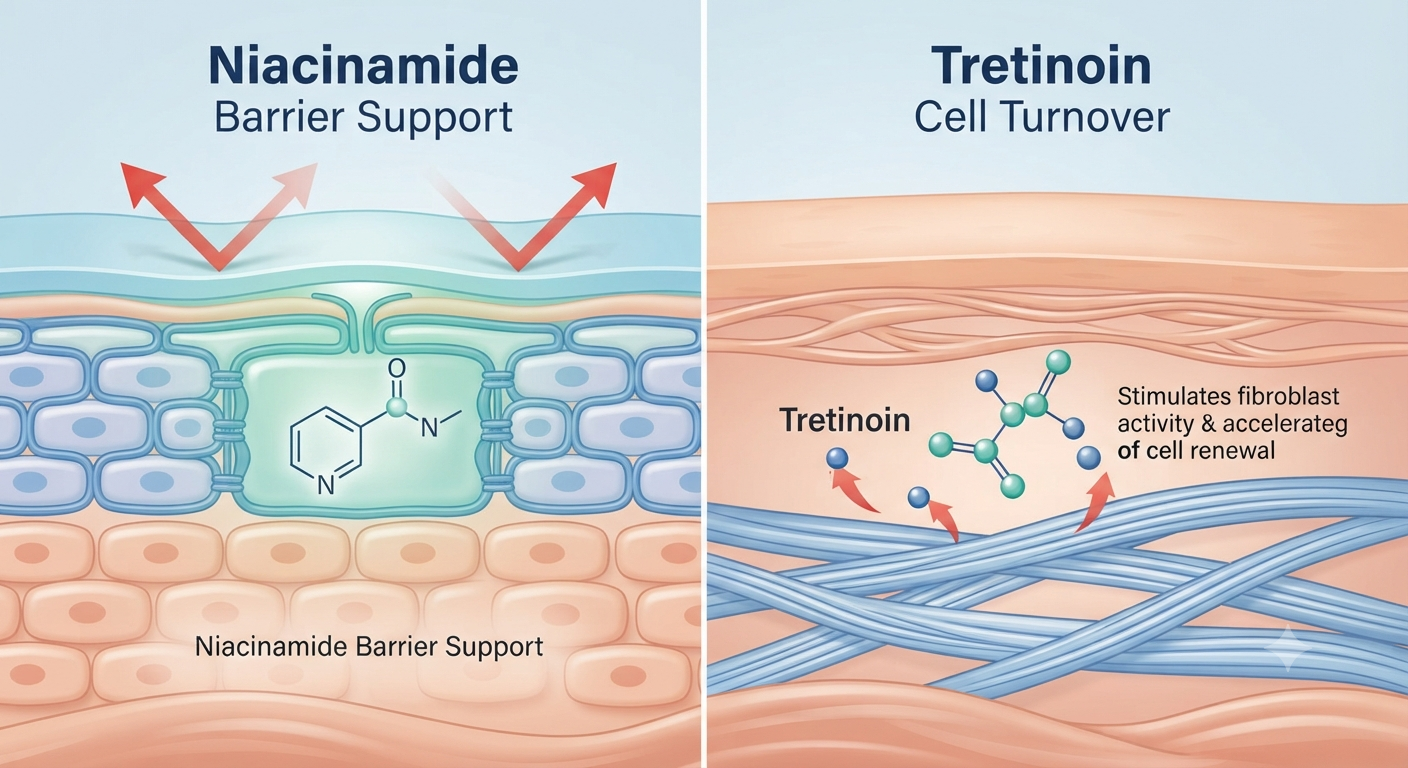
Niacinamide (vitamin B3) is a well-tolerated ingredient known for supporting the skin barrier, calming redness, and helping regulate oil production. Unlike exfoliating acids or retinoids, it doesn’t increase cell turnover, which is exactly why it doesn’t compete with tretinoin’s mechanism of action.
What Does Tretinoin Do?
Tretinoin works by speeding up skin cell turnover and boosting collagen production, which is why it’s effective against acne, fine lines, and uneven texture. It’s also the reason for common side effects like dryness, peeling, and increased sun sensitivity, especially in the first several weeks of use.
Why This Combination Works
Because niacinamide supports the skin barrier rather than exfoliating it, it can help offset some of the dryness and irritation that comes with tretinoin — without diluting tretinoin’s effectiveness. Several small studies and years of dermatological use have found niacinamide to be well tolerated alongside retinoids, which is why it’s frequently recommended as a companion ingredient rather than an alternative.
How to Layer Niacinamide and Tretinoin
Option 1: Same night, different times.
Apply niacinamide serum in the morning as part of your regular routine, and reserve tretinoin exclusively for nights. This is the simplest approach and avoids any concern about interaction, since the two are never on your skin within the same short window.
Option 2: Same night, spaced apart.
If you want to use both at night, apply niacinamide first, wait about 15–20 minutes for it to absorb, then apply tretinoin. Follow with a barrier-repair moisturizer — our own Lipidz Barrier Cream — once the tretinoin has had a few minutes to settle.
What to avoid: applying both products at the exact same time without any gap, especially early in your tretinoin routine when your skin is still adjusting. Even well-tolerated ingredients can cause more sensitivity when layered too aggressively before your barrier has strengthened.
A Sample Combined Routine
Morning: 1. Gentle cleanser (we recommend our own Glow Med C Cleanser) 2. Niacinamide serum 3. Lightweight moisturizer 4. Broad-spectrum SPF 50 (our own Z-Block SPF 50)
Night: 1. Cleanser, patted fully dry (Glow Med C Cleanser again) 2. Wait 20–30 minutes 3. Pea-sized amount of tretinoin 4. Wait 20 minutes, then apply Lipidz Barrier Cream
This structure lets you get the barrier-supporting benefits of niacinamide without adding any extra irritation risk to your tretinoin nights. If you’re new to tretinoin specifically, our guide on how to build a complete tretinoin routine covers the full step-by-step process.
What Results to Expect
Used consistently, this combination can help with:
- Reduced redness and visible irritation during the tretinoin adjustment period
- More balanced oil production, which can help with breakouts
- A stronger, more resilient skin barrier over time
- Continued acne, texture, and fine-line improvement from tretinoin itself
Results from niacinamide tend to show up faster — often within 2–4 weeks for texture and redness — while tretinoin’s full effects typically take 8–12 weeks or longer to fully appear.
Common Mistakes to Avoid
- Assuming “safe to combine” means “no adjustment period.” You may still experience the normal side effects of starting tretinoin, even with niacinamide in your routine — keep a barrier-repair moisturizer like Lipidz Barrier Cream on hand for this.
- Skipping SPF because your skin feels calmer. Niacinamide doesn’t reduce tretinoin’s sun sensitivity — daily SPF 50, such as Z-Block SPF 50, is still essential every morning.
- Using a high-percentage niacinamide serum (10%+) right away. Starting at a lower concentration (around 4–5%) reduces the chance of any additional irritation while your skin adjusts to tretinoin.
- Mixing niacinamide with vitamin C in the same step. This isn’t related to tretinoin directly, but it’s a common layering mistake worth avoiding — space them into separate parts of your routine if you use both.
Frequently Asked Questions
Can I use a niacinamide moisturizer instead of a serum with tretinoin? Yes. A moisturizer formulated with niacinamide can work well as your daytime hydrator, giving you the barrier-support benefits without adding an extra step to your routine.
Will niacinamide reduce how well tretinoin works? No. Because niacinamide doesn’t affect cell turnover or compete with tretinoin’s mechanism, it doesn’t reduce its effectiveness. Some people find their skin tolerates tretinoin better with niacinamide in the routine, which can support more consistent use over time.
Is it safe to start both at the same time? It’s generally fine, but if you’re new to both ingredients, introducing tretinoin first and adding niacinamide once your skin has adjusted for a couple of weeks makes it easier to identify the source of any irritation, should it occur.
Can I use niacinamide and vitamin C together with tretinoin? Niacinamide and tretinoin pair well together, but layering in vitamin C as well adds another active to track. If you want to use all three, apply vitamin C in the morning, niacinamide in the morning or evening, and reserve tretinoin exclusively for nights.
Niacinamide and tretinoin are one of the more compatible active ingredient pairings in skincare, and combining them thoughtfully can actually smooth out the early adjustment period rather than complicate it. Keep the two spaced apart if you’re using both at night, stay consistent with SPF, and give your skin time to adjust. Ready to add tretinoin to your routine? Explore our full range of tretinoin creams and find the right strength to start with.