- Tretinoin for Beginners: A Guide to Getting Started
- Should You Choose Cream or Gel?
- Which Strength is Right for You?
- Tretinoin for Sensitive Skin: How to Use It Safely
- Tretinoin for Acne
- Tretinoin for Hyperpigmentation
- Tretinoin for Wrinkles and Fine Lines
- Tretinoin for General Skin Texture
- Tretinoin for Sun Damage


8 Tretinoin Side Effects and How to Manage Each One

8 Tretinoin Side Effects and How to Manage Each One
Tretinoin is one of the most effective ingredients available for acne, fine lines, and uneven texture, but almost everyone experiences some side effects while their skin adjusts. Knowing what’s normal — and what to actually do about it — is the difference between pushing through the first few weeks successfully and giving up too early. Here are the 8 most common side effects people report with Tretinoin Cream, along with practical ways to manage each one.
1. Peeling and Flaking
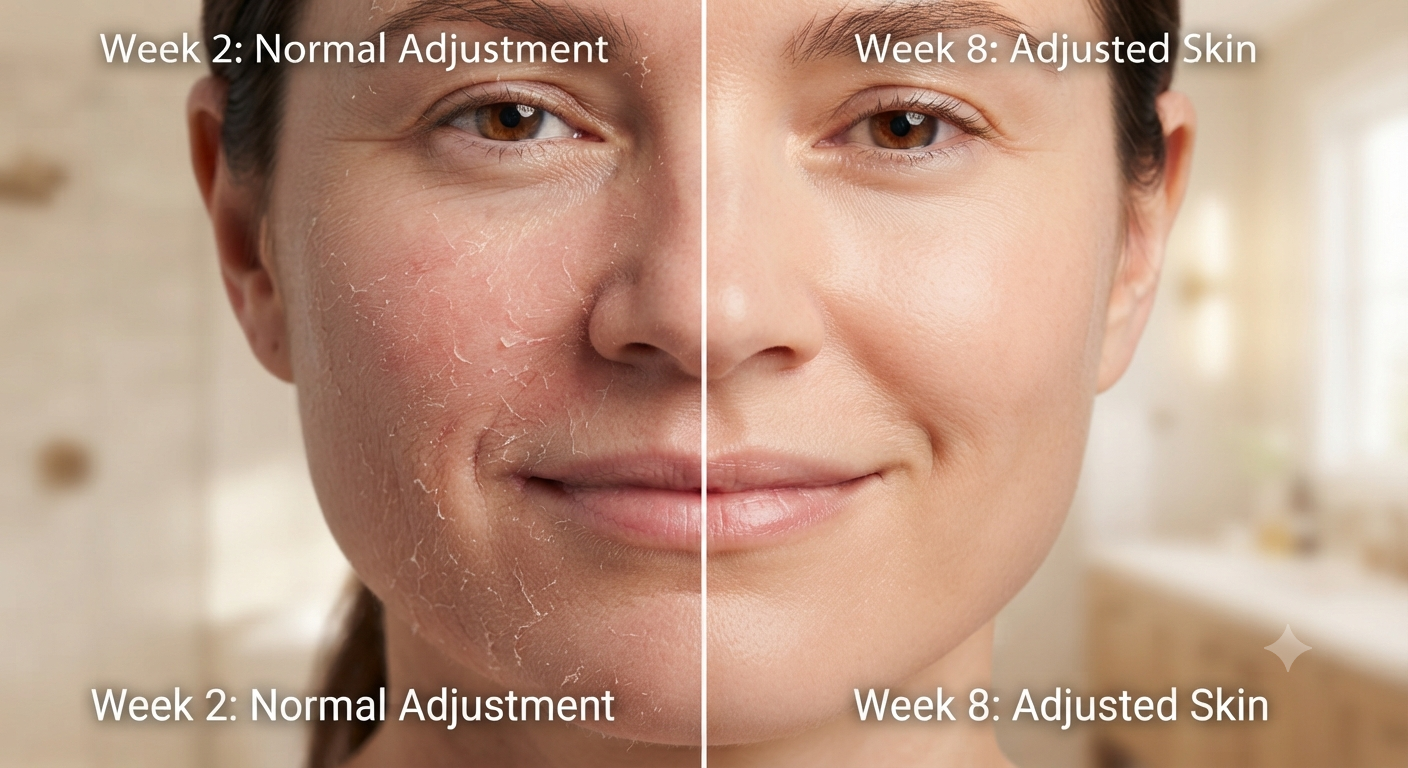
This is the most well-known tretinoin side effect, especially in the first 2–6 weeks. Tretinoin speeds up skin cell turnover, and the visible flaking is simply old skin cells shedding faster than usual.
How to manage it: Avoid picking at flaking skin. Use a gentle, fragrance-free barrier-repair moisturizer twice daily — we recommend our own Lipidz Barrier Cream — and reduce your tretinoin frequency for a week if peeling becomes uncomfortable rather than cosmetic.
2. Redness and Stinging
Mild redness or a stinging sensation right after application is common, particularly with stronger formulations.
How to manage it: Try the “buffering” technique — apply a barrier-repair moisturizer like Lipidz Barrier Cream first, wait a few minutes, then apply tretinoin on top. This slightly dilutes the initial contact without significantly reducing effectiveness.
3. Dryness Beyond Normal Flaking
Some people experience tightness or dryness that extends beyond the visible peeling, especially around the mouth and cheeks.
How to manage it: Layer a thicker, occlusive barrier-repair moisturizer at night — our own Lipidz Barrier Cream is formulated with ceramides, squalane, and hyaluronic acid for exactly this — and consider a humidifier if you live in a dry climate.
4. Purging (Temporary Breakouts)
Many new users see an initial increase in breakouts before their skin improves. This happens because tretinoin accelerates the surfacing of acne that was already forming beneath the skin.
How to manage it: Purging typically resolves within 4–6 weeks. Resist the urge to stop treatment during this phase — stopping and restarting often extends the adjustment period rather than shortening it. Cleanse gently with a non-stripping cleanser such as our own Glow Med C Cleanser rather than anything harsh or exfoliating.
5. Increased Sun Sensitivity
Tretinoin thins the outer layer of dead skin cells, which makes skin more vulnerable to UV damage and sunburn.
How to manage it: Daily broad-spectrum SPF 50 is essential, not optional, for anyone using tretinoin — we recommend our own Z-Block SPF 50. Reapply if you’re outdoors for extended periods, and consider a hat for additional coverage.
6. Itching
Mild itching can accompany the dryness and irritation phase, particularly in the first month.
How to manage it: Avoid scratching, which can damage the skin barrier further. A fragrance-free barrier-repair moisturizer with ceramides, such as our own Lipidz Barrier Cream, can help calm itchiness without interfering with tretinoin’s effects.
7. Skin Discoloration (Temporary)
Some users notice temporary redness or, less commonly, patches of lighter or darker skin during the adjustment period, especially on more reactive skin types.
How to manage it: This usually resolves as the skin barrier strengthens. If discoloration persists beyond 8–10 weeks or seems to be worsening, it’s worth checking in with a dermatologist to rule out other causes.
8. Eye or Lip Irritation
Applying tretinoin too close to the eyes, nostrils, or lips can cause localized irritation in these more delicate areas.
How to manage it: Apply a thin layer of plain barrier-repair moisturizer (Lipidz Barrier Cream works well here) around the eyes, nostrils, and lip line before applying tretinoin elsewhere, creating a barrier that keeps the active ingredient away from sensitive tissue.
When to Slow Down vs. When to Push Through
A helpful rule of thumb: mild redness, flaking, and occasional tightness are a normal part of the adjustment period and don’t require stopping treatment. But if you experience swelling, blistering, or irritation that doesn’t improve after reducing frequency for two weeks, pause use and consult a dermatologist. For a broader look at what to expect over time, see our guide on how long tretinoin takes to work.
How Long Do Side Effects Usually Last?
For most people, the most noticeable side effects — peeling, redness, and purging — peak somewhere between weeks 2 and 4, then gradually ease as the skin barrier adapts. By week 8, the majority of users report significantly less irritation, even while continuing to see improvements in texture and clarity. A smaller number of people, particularly those with naturally sensitive or fair skin, may take slightly longer and benefit from a slower frequency build-up throughout that period.
Choosing the Right Strength to Minimize Side Effects
If side effects feel disproportionate to your results, strength is often the issue rather than the ingredient itself. Many people find that starting lower and building up — rather than starting at a higher percentage — leads to a smoother experience overall. Our article on tretinoin concentration and which strength is right for you breaks down how to choose between 0.025%, 0.05%, and 0.1%.
Your Complete Support Routine
Managing side effects comes down to three things: a gentle cleanser, a barrier-repair moisturizer, and daily SPF. Our own range covers all three:
- Glow Med C Cleanser — a gentle, non-stripping cleanser suited to reactive, adjusting skin
- Lipidz Barrier Cream — our barrier-repair moisturizer for dryness, flaking, and irritation
- Z-Block SPF 50 — broad-spectrum daily sunscreen, essential while using tretinoin
Side effects with tretinoin are common, expected, and almost always manageable with small adjustments to frequency, layering, and moisturizing — not a sign that the product isn’t working for you. Most people find their skin adjusts significantly within 6–8 weeks. If you’re ready to start with a gentler formulation, browse our full range of tretinoin strengths and begin building your routine today.