- Tretinoin for Beginners: A Guide to Getting Started
- Should You Choose Cream or Gel?
- Which Strength is Right for You?
- Tretinoin for Sensitive Skin: How to Use It Safely
- Tretinoin for Acne
- Tretinoin for Hyperpigmentation
- Tretinoin for Wrinkles and Fine Lines
- Tretinoin for General Skin Texture
- Tretinoin for Sun Damage


Tazarotene vs Tretinoin for Wrinkles: Which Wins?

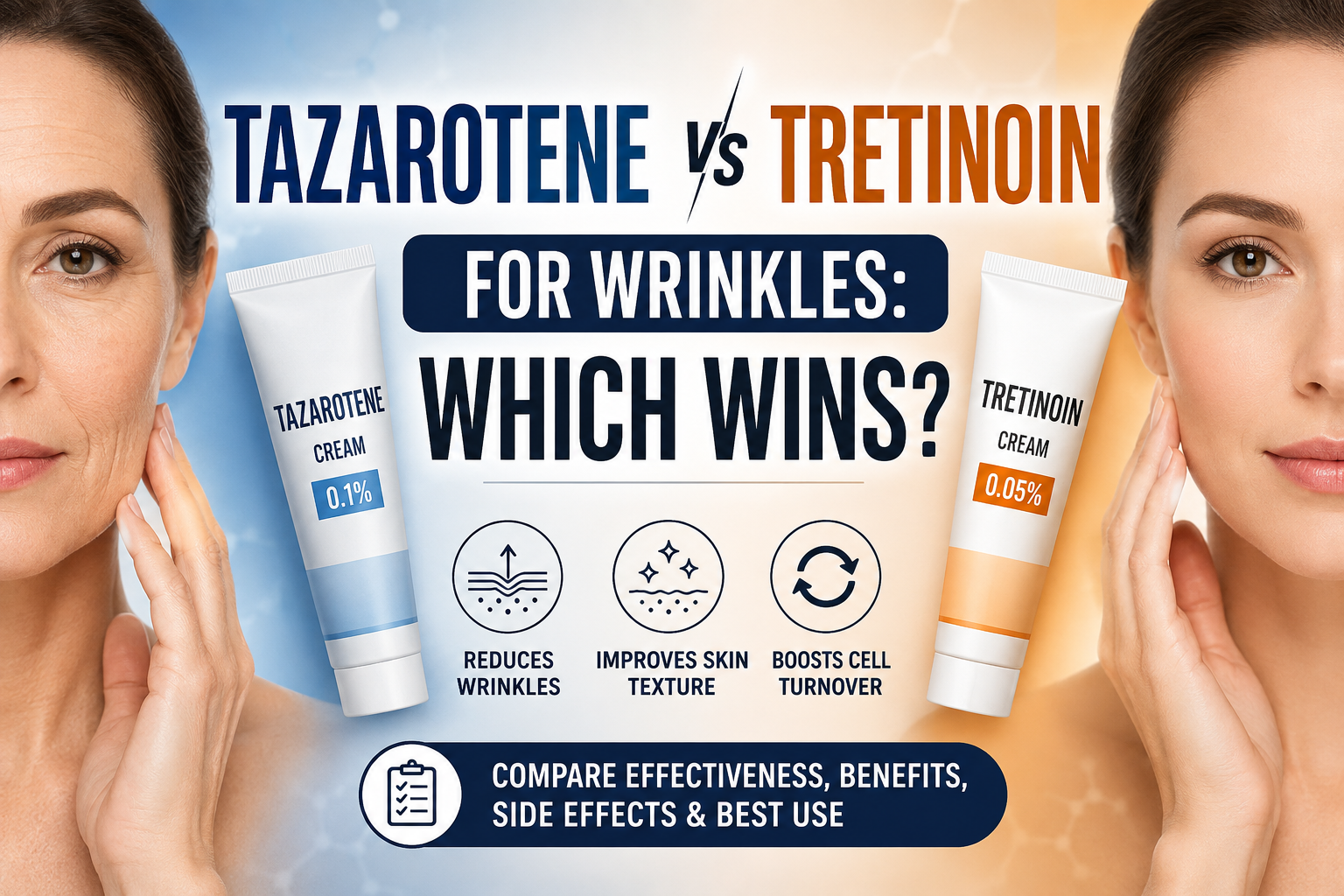
Tazarotene vs Tretinoin for Wrinkles: Which Wins?Both tazarotene and tretinoin are prescription-strength retinoids used to treat fine lines, wrinkles, pigmentation and uneven texture — but they aren’t interchangeable. If you’re trying to decide between the two before you buy Tazarotene Cream UK or buy Tretinoin Cream UK, here’s exactly how they compare so you can make the right call for your skin.
How Tazarotene Works
Tazarotene is a synthetic retinoid, meaning it’s engineered rather than derived directly from vitamin A. It binds strongly to skin cell receptors, which is why it’s often considered one of the more potent options available:
- Frequently prescribed for stubborn acne and psoriasis, alongside anti-ageing use
- Tends to act faster on cell turnover than tretinoin in some studies
- Generally causes more initial irritation than tretinoin
- Available in strengths such as 0.05% and 0.1%
How Tretinoin Works
Tretinoin is the original, most-studied topical retinoid, used in dermatology for decades:
- Naturally derived active form of vitamin A
- Extensive long-term safety and efficacy data
- Available in a wider range of strengths for gradual introduction (0.025%, 0.05%, 0.1%)
- Generally considered slightly more tolerable for first-time users
Tazarotene vs Tretinoin: Side-by-Side
| Factor | Tazarotene | Tretinoin |
| Type | Synthetic retinoid | Natural vitamin A derivative |
| Potency | Very high | High |
| Irritation | Often more noticeable | Moderate, dose-dependent |
| Best studied for | Acne, psoriasis, ageing | Acne, ageing, hyperpigmentation |
| Beginner-friendly | Less so | More gradual entry options |
Which Should You Choose for Fine Lines & Anti-Ageing?
If your main concern is early fine lines and you’re new to retinoids, tretinoin’s wider range of starting strengths makes it easier to ease in without overwhelming your skin barrier. If you’ve already built tolerance to retinoids and want a stronger, faster-acting option — particularly if acne is part of the picture too — tazarotene may deliver more noticeable results sooner, combined with less downtime than you’d expect.
Many new users start with our Tazarotene 0.05% Cream and progress to the Tazarotene 0.1% Cream. Many new tretinoin users begin with 0.025% Tretinoin Cream, progressing to 0.05% and then 0.1% Tretinoin Cream.
Tips for Reducing Irritation With Either Option
Applying retinoids correctly — paired with a broad-spectrum SPF 50 sunscreen and a barrier-repair moisturiser — makes a noticeable difference in comfort:
- Apply a pea-sized amount only, to fully dry skin
- Start at 2–3 nights per week and build up gradually
- Pair with a barrier-repair moisturiser on off nights
- Never skip SPF — both ingredients increase sun sensitivity; we recommend Lipidz Rapid Repair barrier cream and Z-Block SPF 50
If you’re unsure which strength to start with, read our guide on choosing the right tretinoin concentration.
Mineral vs Chemical Sunscreen With a Retinoid
One of the most common questions we receive is whether a mineral (physical) sunscreen or a chemical sunscreen is better when using tretinoin or tazarotene. The truth is that both can provide excellent protection, provided they offer broad-spectrum UVA and UVB coverage and are applied correctly.
Mineral sunscreens contain ingredients such as zinc oxide and titanium dioxide. They’re often recommended for people with very sensitive skin, rosacea, or those who experience irritation from certain sunscreen filters.
Modern chemical sunscreens use advanced UV filters that provide high levels of protection while feeling lightweight and comfortable on the skin. Many people find these easier to wear every day because they absorb quickly and leave little to no white cast.
Whichever type you choose, the most important factor is wearing a broad-spectrum SPF 50+ every single morning and reapplying it when spending time outdoors — even on cloudy days, since UVA rays penetrate through clouds and glass.
Our Recommendation
If you’re using either tazarotene or tretinoin, protecting your skin from UV exposure is just as important as applying the active correctly. Daily SPF 50 helps reduce the risk of sunburn, supports your skin barrier, and protects the improvements you’re working so hard to achieve.
For this reason, we recommend a high-protection, broad-spectrum SPF 50+ sunscreen such as Z-Block SPF 50, paired with Lipidz Rapid Repair Barrier Cream, as part of your daily skincare routine.
Conclusion: Should I Use a Mineral or Chemical Sunscreen With Tretinoin or Tazarotene?
Tazarotene and tretinoin both deliver real anti-ageing results, but tazarotene tends to be the stronger, faster option, while tretinoin offers a gentler, more gradual path — especially useful if you’re just starting out. Whichever you choose, consistency and proper skin preparation matter more than which retinoid you pick.
Ready to get started? Buy Tazarotene UK or buy Tretinoin UK — explore our full tretinoin range today.
Why Use Lipidz Barrier Cream With Tretinoin?
Tretinoin is one of the most effective anti-ageing and acne treatments available, but during the first few weeks it can leave the skin feeling dry, tight, flaky and irritated. This happens because tretinoin speeds up skin cell turnover, temporarily weakening the skin’s natural protective barrier.
A barrier-repair moisturiser like Lipidz Barrier Cream helps replenish the lipids that healthy skin needs to retain moisture and defend itself against irritation.
Benefits of Lipidz Barrier Cream
✓ Helps restore the skin barrier when using tretinoin
✓ Reduces dryness, flaking and tightness
✓ Deeply hydrates without feeling greasy
✓ Helps skin tolerate tretinoin more comfortably
✓ Suitable for sensitive and irritated skin
Key Barrier-Repair Ingredients
Based on the product information:
- Ceramides (0.5%) — help repair and strengthen the skin’s natural barrier while reducing water loss
- Squalane (2%) — provides lightweight moisturisation and supports a healthy skin barrier
- Hyaluronic Acid (0.1%) — attracts and holds water within the skin for long-lasting hydration
- Lecithin (0.5%) — helps reinforce the skin’s lipid layer and improves softness
How to Use With Tretinoin
For many people, applying Lipidz after tretinoin — or using the “sandwich method” of moisturiser → tretinoin → moisturiser — can significantly reduce irritation while allowing consistent tretinoin use.
Healthy, hydrated skin is better able to tolerate tretinoin, making long-term use more comfortable and helping you stay on track with your skincare goals.